

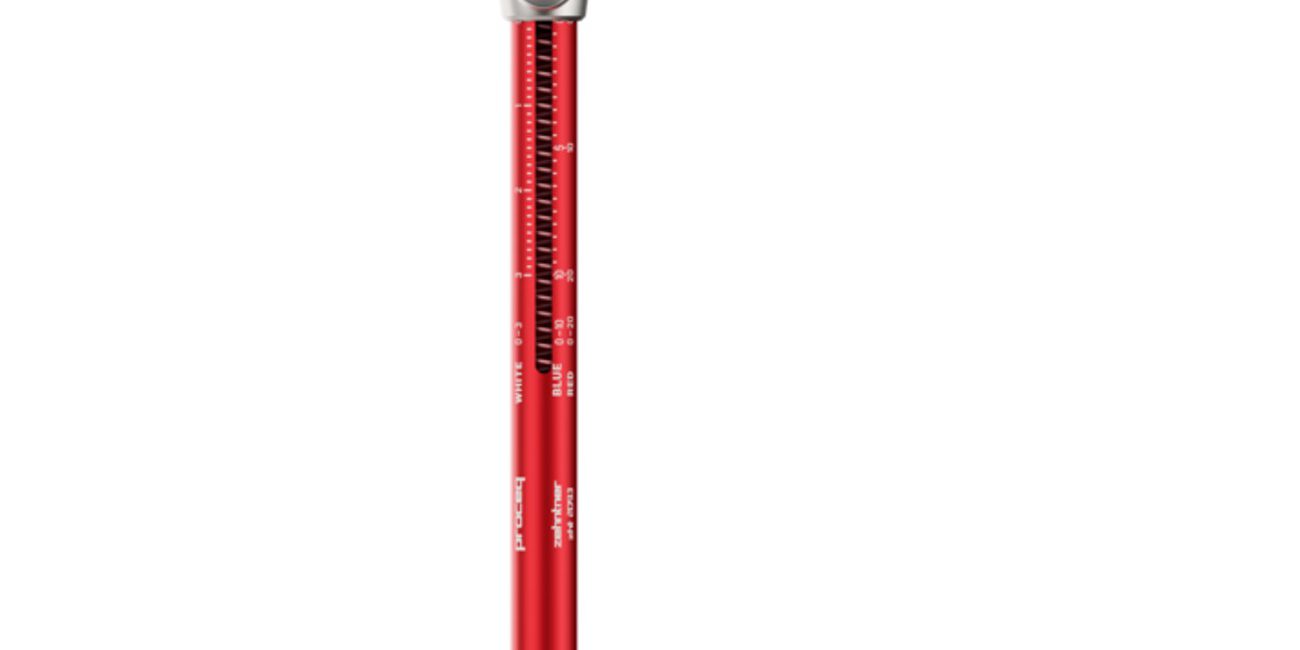
Zehntner ZHT 2093 – Hardness Test Pencil with Rubber Guide Wheels
Home / Products / Hardness & Scratch Testers / Zehntner ZHT 2093 Hardness Test Pencil with Rubber Guide Wheels
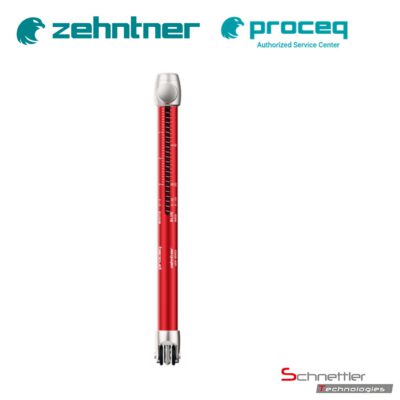
Zehntner ZHT 2093 – Hardness Test Pencil with Rubber Guide Wheels
Category: Hardness & Scratch Testers
Manufacturer: Proceq / Zehntner
Article number: 43050200 / ZHT 2093
Application:
The Zehntner ZHT 2093 is a compact hardness test pencil for determining the scratch and mar resistance of coatings on flat and curved surfaces. The integrated rubber guide wheels support uniform instrument guidance and help prevent accidental damage to sensitive surfaces.
Scratch-hardness testing with an adjustable test force
Scratch-hardness testing determines the force required to produce a visible scratch or mar on a coated surface. The test force is adjusted using a compression spring. Three color-coded springs cover different force ranges up to 20 N.
- Testing of flat and curved surfaces
- Three force ranges of 0–3 N, 0–10 N and 0–20 N
- Adjustable test force using interchangeable compression springs
- Color coding for quick identification of the force range
- Rubber guide wheels for controlled instrument guidance
- Interchangeable test tips for different testing tasks
- Compact design for laboratories, production and mobile inspections
Function of the rubber guide wheels
The guide wheels stabilize the hardness test pencil during movement and support consistent positioning of the test tip. Their soft running surfaces also reduce the risk of damaging sensitive areas outside the actual test track.
Typical applications
- Scratch-hardness testing of paints and varnishes
- Quality control of coated components
- Testing painted plastic and metal surfaces
- Furniture and wood coatings
- Automotive and supplier industries
- Laboratory testing and production-related inspections
Suitable test surfaces
- smooth, flat surfaces
- curved or slightly convex components
- painted metal surfaces
- coated plastics
- wood and furniture surfaces
- different single- and multi-coat systems
Note: The appropriate test tip and force range depend on the coating, substrate and applicable test procedure.
Operation
- Select a suitable compression spring for the expected hardness range.
- Insert the appropriate test tip and inspect it for cleanliness and damage.
- Set the spring preload to the required value using the clamping screw.
- Place the hardness test pencil on the test surface using the guide wheels.
- Press the test tip against the surface using the selected spring force.
- Draw a straight test track of approximately 10 mm within about one second.
- Repeat the test with an adjusted force until the defined evaluation criterion is reached.
- Read the selected force from the scale and document the result.
- Return the spring preload to zero after testing.
Notes for reproducible testing
- Clean the test surface before testing
- position the test tip vertically and securely
- move the instrument at a uniform speed
- keep the test distance and test duration as constant as possible
- regularly inspect the test tip for wear
- evaluate the result in accordance with the specified test procedure
- perform several tests at different positions
Standard delivery
- 43050200 / ZHT 2093: hardness test pencil with rubber guide wheels
- 0.75 mm Bosch test tip
- three compression springs with different force ranges
- manufacturer’s certificate
- carrying case
Test tips and options
- 43010915 / ACC107: 1.0 mm test tip, based on ISO 1518
- 43010916 / ACC108: 0.5 mm van Laar test tip
- 43010929 / ACC1287: adapter for scratch-hardness and mar-resistance testing on the ZAA 2600 platform
- ACC112: hand carriage for supported and uniform instrument guidance
Compression-spring force ranges
The supplied compression springs are color-coded and cover three force ranges. For the most precise adjustment, select the spring with a measuring range as close as possible to the expected test value.
White spring
Force range:
0–3 N
Scale graduation according to the manufacturer:
10 g
Blue spring
Force range:
0–10 N
Scale graduation according to the manufacturer:
50 g
Red spring
Force range:
0–20 N
Scale graduation according to the manufacturer:
100 g
Technical data
- Dimensions: 170 mm × Ø 15 mm
- Weight: approx. 73 g
- Maximum force range: 20 N
- Standard test tip: 0.75 mm Bosch version
- Additional test tips: optional 0.5 mm and 1.0 mm versions
- Guidance: integrated rubber guide wheels
Standards and test procedures
- DIN 55656
- DIN SPEC 91064
- based on ISO 1518 when using the appropriate test tip
Selecting the spring and test tip
The expected hardness range, coating type and applicable test procedure are the main configuration criteria.
- Force range: select a spring as close as possible to the expected test value
- Test tip: determine the required diameter and geometry according to the test procedure
- Surface: consider whether it is flat, curved, sensitive or textured
- Substrate: consider its hardness and deformability
- Evaluation: define the relevant visible mark or penetration criterion
Hardness and scratch testers
Further instruments are available for pencil-hardness, scratch-hardness and mar-resistance testing, depending on the test method, force range and surface geometry.