

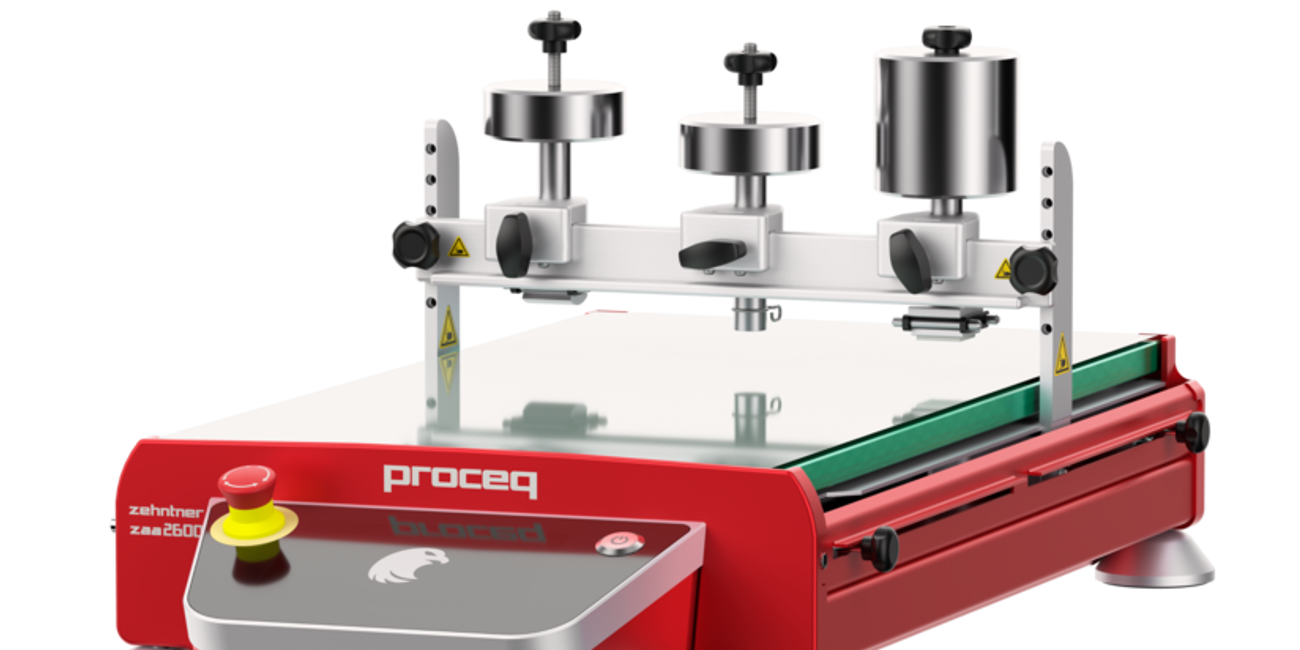
Zehntner ZAA 2600.C – Automatic Crockmeter
Home / Products / Crockmeters / Zehntner ZAA 2600.C Automatic Crockmeter
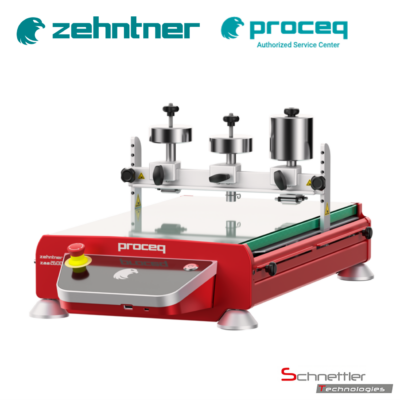
Zehntner ZAA 2600.C – Automatic Crockmeter
Category: Crockmeters / Rubbing Testers
Instrument platform: ZAA 2600
Manufacturer: Proceq / Zehntner
Article number: 43010102 / ZAA 2600.C
Application:
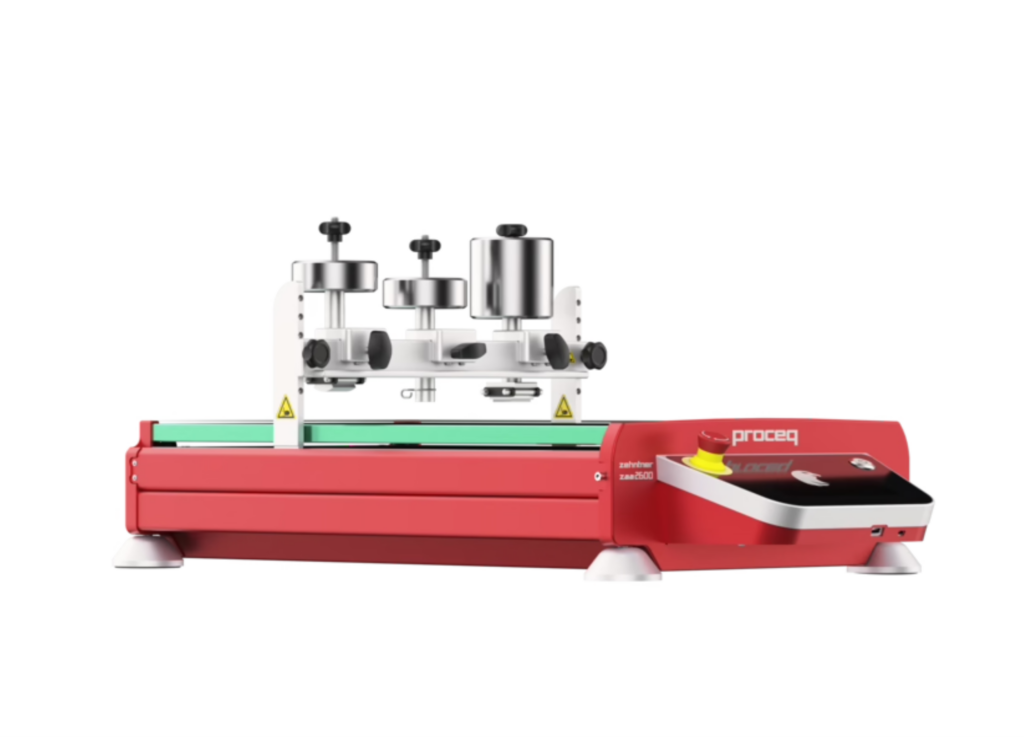
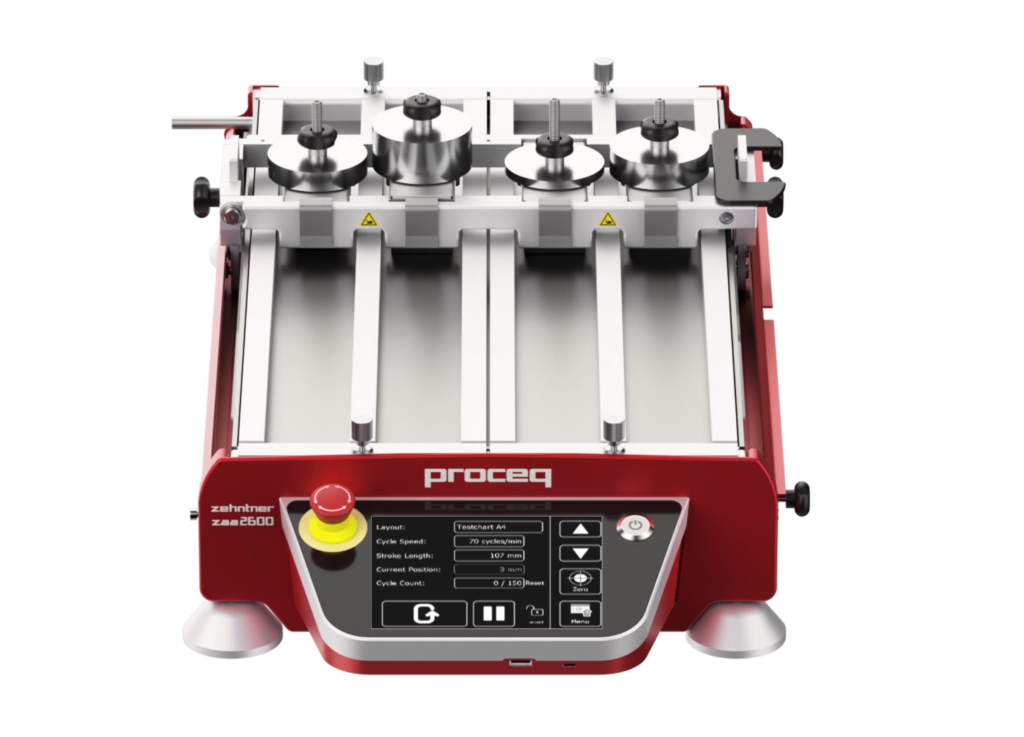
The ZAA 2600.C is an automatic linear-stroke instrument for reproducible Crockmeter and colorfastness-to-rubbing tests. Stroke length, speed and cycle count are configured using the capacitive 5.7-inch touchscreen and can be stored as test profiles. The instrument is suitable for laboratories, quality assurance and research and development.
Different rubbing fingers, rubbing materials and test weights allow the instrument to be adapted to various standards, surface geometries and test procedures.
Automated colorfastness-to-rubbing testing
In manual rubbing tests, test force, movement and cycle count may be influenced by the operator. In contrast, the ZAA 2600.C performs the linear rubbing movement using defined parameters, providing a reliable basis for comparable test and quality data.
- Automatic linear stroke for reproducible rubbing tests
- Continuously adjustable stroke length from 1 to 393 mm
- Storable test profiles for stroke length, speed and cycle count
- Up to four simultaneous tests, depending on the test configuration and accessories
- Quick tool changes for different rubbing fingers and test procedures
- Suitable for flat and curved specimens
- Touchscreen operation with multilingual user interface
Crockmeters and rubbing testers
Relevant selection criteria include the test standard, rubbing tool, test force, specimen size and surface geometry.
Our category includes the ZAA 2600.C as well as further solutions and accessories for reproducible colorfastness-to-rubbing and abrasion testing.
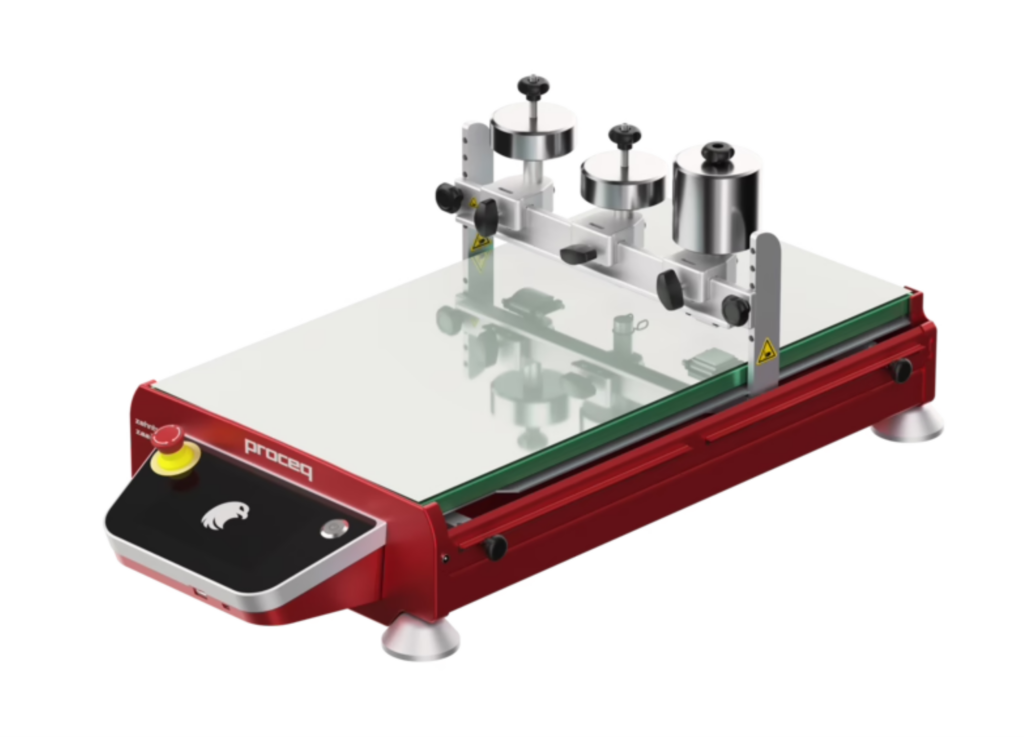
Friction finger sets
Three friction finger sets are available for different standards, test surfaces and specimen geometries. The required test force is achieved only in combination with the designated Zehntner rubbing fingers and weights.
Friction finger set A
Contact area:
22 × 22 mm
Suitable for:
flat specimens
Standard:
EN ISO 21546
Test force:
9 N with the appropriate Zehntner configuration
Article number:
43010930 / ACC1315
Friction finger set B
Rubbing finger:
Ø 16 mm
Suitable for:
flat specimens
Standards and test procedures:
- EN ISO 21546
- AATCC Test Method 8
- DIN EN 13523-11
- EN ISO 105-X12
- Volkswagen PV 3906
- based on ASTM F1319
Test force:
9 N with the appropriate Zehntner configuration
Article number:
43010932 / ACC1344
Friction finger set C
Suitable for:
curved specimens
Standards and test procedures:
- EN ISO 21546
- BMW AA-0134
Test force:
22 N with the appropriate Zehntner configuration
Article number:
43010933 / ACC1345
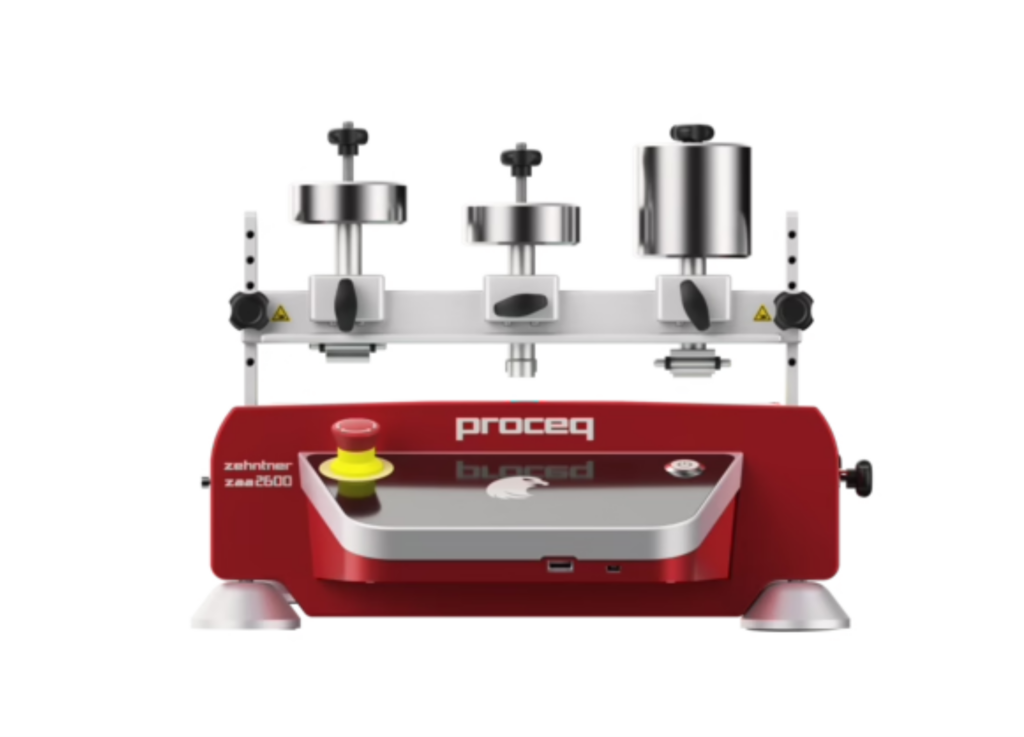
Test forces and additional weights
Depending on the friction finger set and test procedure, the required test force is generated using the appropriate tool set and additional weights.
- 43010934 / ACC1346: weight for a test force of 9 N
- 43010935 / ACC1347: weight for a test force of 22 N
- 43010953 / ACC1482: additional weight, 50 g
- 43010954 / ACC1484: additional weight, 100 g
- 43010955 / ACC1486: additional weight, 500 g
Note: The test force specified by the relevant standard is achieved only with the designated rubbing finger, holder and weight combination.
Flat and curved specimens
The ZAA 2600.C can be configured for different specimen shapes. Flat specimens are secured on the glass plate. Removable clamps and the appropriate friction finger set can be used for convex or curved components.
- Glass plate: flat support surface for flat specimens
- Frame and specimen clamps: secure fixation during testing
- Removable clamps: allow curved surfaces to be accommodated
- 43010933 / ACC1345: friction finger set C for curved specimens
Touchscreen and test profiles
All movement parameters are configured using the touchscreen. Recurring tests can be stored as profiles and quickly recalled.
- Stroke length: freely definable start and end positions
- Speed: adjustable to suit the test procedure
- Cycle count: specify the required number of double strokes
- Profile memory: store recurring test programs
- Multilingual operation: intuitive use in the laboratory
Standard delivery
- 43010102 / ZAA 2600.C: automatic Crockmeter with touchscreen
- Reversible double-sided glass and rubber-coated fabric plate
- Tool holder
- Spirit level for alignment
- Power cable
- Manufacturer’s certificate
- Operating manual
Friction tools and weights
- 43010930 / ACC1315: friction finger set A, contact area 22 × 22 mm
- 43010932 / ACC1344: friction finger set B, rubbing finger Ø 16 mm
- 43010933 / ACC1345: friction finger set C for curved specimens
- 43010934 / ACC1346: weight for a test force of 9 N
- 43010935 / ACC1347: weight for a test force of 22 N
- 43010953 / ACC1482: additional weight, 50 g
- 43010954 / ACC1484: additional weight, 100 g
- 43010955 / ACC1486: additional weight, 500 g
- 43010937 / ACC1353: cotton rubbing cloth
Modular extensions
- ACC1287: adapter for scratch-hardness and mar-resistance testing
- 43010931 / ACC1339: film-application conversion kit
- 43010928 / ACC1286: scrub and wet-abrasion tester conversion kit
Film application
The instrument platform can be configured for reproducible film drawdowns using the 43010931 / ACC1339 conversion kit. The dedicated 43010100 / ZAA 2600.A version is also available.
Scrub and wet-abrasion testing
The instrument can be expanded for scrub and wet-abrasion testing using the 43010928 / ACC1286 conversion kit. The dedicated 43010103 / ZAA 2600.SW version is also available.
Operation
- Determine the applicable test standard or test procedure.
- Select friction finger set A, B or C.
- Prepare the required rubbing material and weight combination.
- Insert the glass plate and securely fix the specimen.
- Use suitable holders or clamps for curved specimens.
- Attach the rubbing material to the rubbing finger.
- Mount the rubbing tool on the tool holder.
- Fit the weights required to achieve the specified test force.
- Set the stroke length, speed and number of double strokes using the touchscreen or select a stored profile.
- Start the rubbing test.
- Evaluate and document the specimen and rubbing material in accordance with the test procedure.
Technical data
- Stroke length: 1–393 mm, continuously adjustable
- Stroke-length accuracy: ±2 mm
- Stroke speed: 1–600 mm/s
- Speed resolution: 1 mm/s
- Speed accuracy: ±1 %
- Double-stroke rate: up to 100 double strokes per minute, depending on stroke length, tool and test load
- Maximum specimen size: approx. 553 × 300 × 72 mm
- Glass plate: 553 × 300 × 15 mm
- Touchscreen: 5.7 inches
- Display: color TFT LCD with LED backlight
- Display resolution: VGA
- Housing: aluminum, powder-coated, matt, fine-textured finish
- Instrument dimensions: 695 × 355 × 210 mm
- Weight without specimen tray: approx. 15.8 kg
- Weight with specimen tray: approx. 20 kg
- Power supply: 115–230 V AC, ±10 %, 50–60 Hz
- Power consumption: 108 W
- Operating temperature: 5 to 45 °C
- Relative humidity: 20–80 %, non-condensing
Standards and test procedures
- EN ISO 21546
- AATCC Test Method 8
- DIN EN 13523-11
- EN ISO 105-X12
- Volkswagen PV 3906
- based on ASTM F1319
- BMW AA-0134
- DIN 55654, depending on the test configuration and accessories
- DIN 55656 and DIN SPEC 91064 with the appropriate scratch-hardness extension